Sample 1 Lightning
Selected drawing:

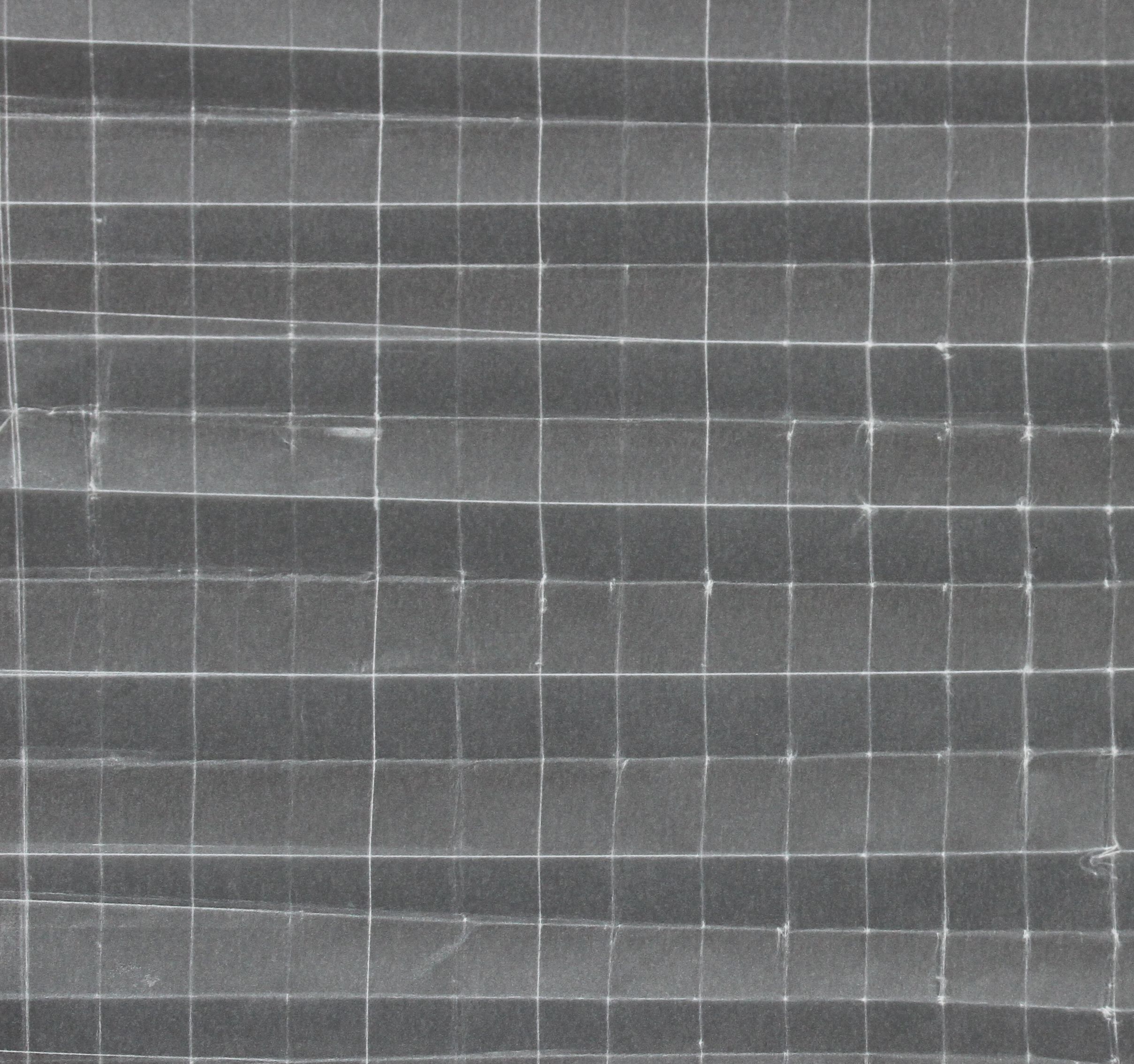
The main idea I pursued for this substrate was that some papers give a white mark when folded, to emulate the white check in the background of this drawing. After trialing several alternatives, I settled on tracing paper.
Of course, the white fold mark only became obvious once the paper was laid against a dark background. To my delight, it resembled the drawing even more so, as the spaces between the folds were now a ghostly grey.
I knew I needed a ragged thread to render the black zig-zags. Thin strips of felt (synthetic) were the winner. The thin strips did not stretch during the sample; however, this was an issue during making the final piece, which required using small lengths and frequent re-threading of my huge tapestry needle.
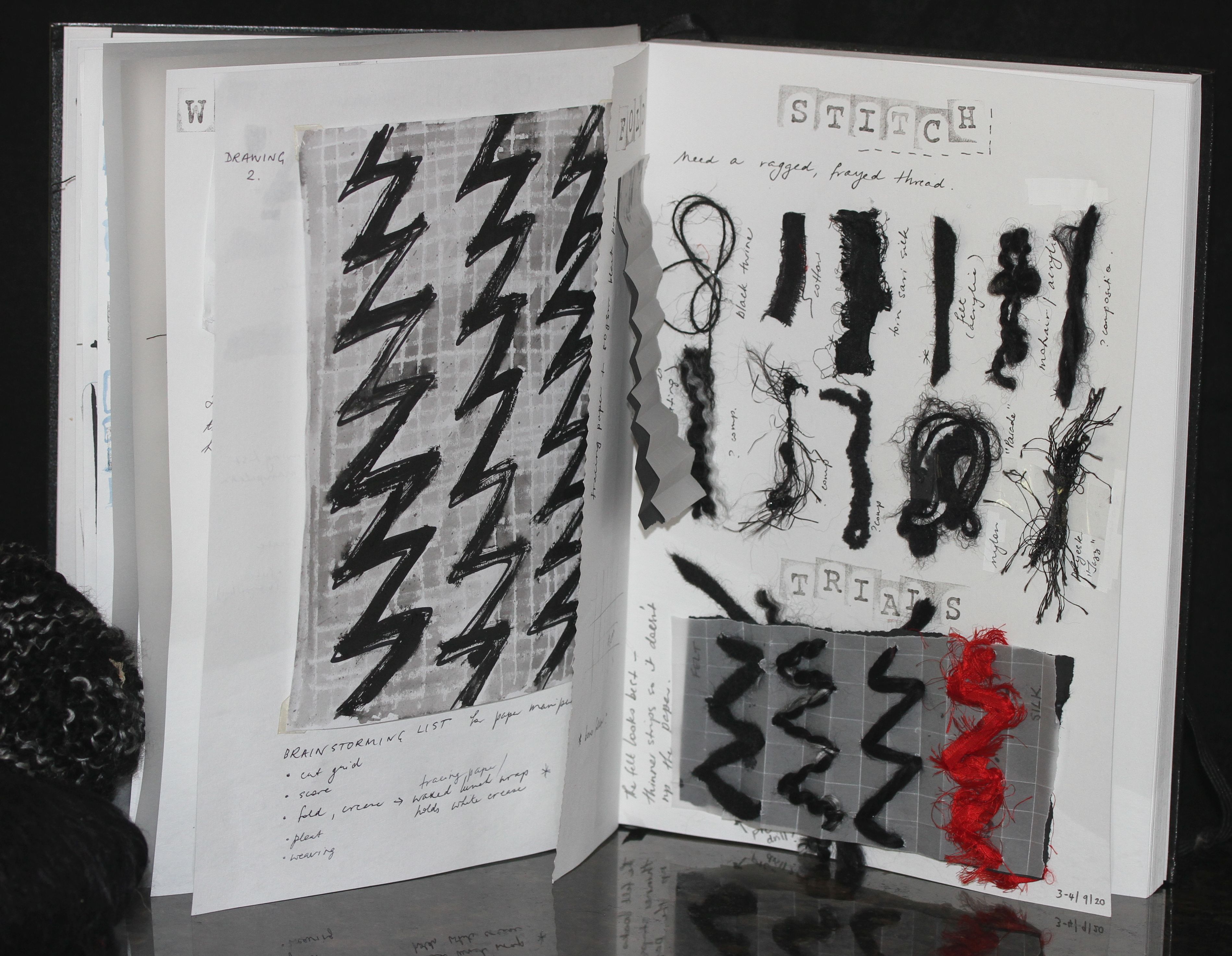
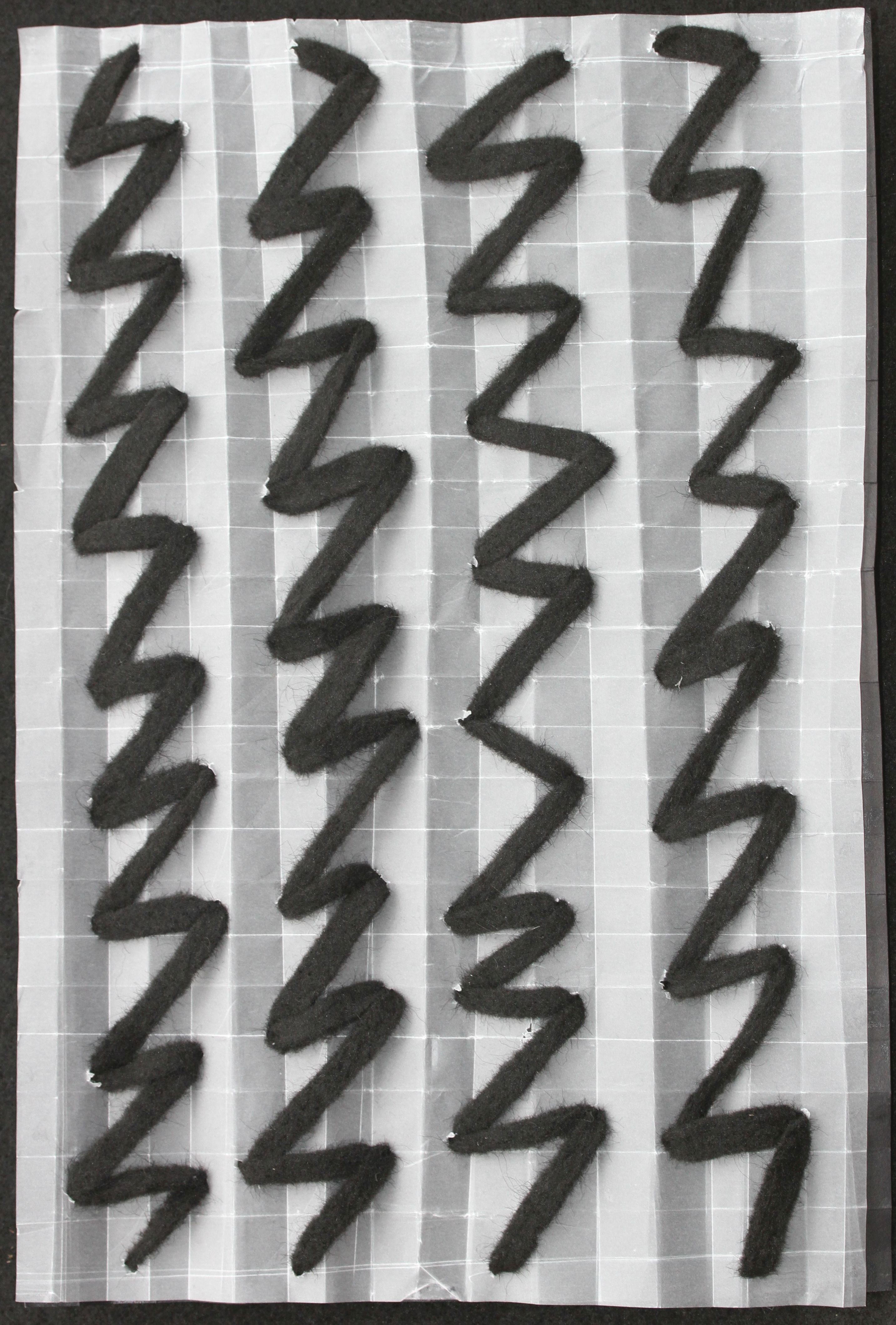
This is an effective piece; the link between the drawing and the stitched outcome is very obvious.
The back of this piece is interesting. Like hieroglyphs. It reminds me of a piece by Hillary Ellis, which shows how beautiful the result of developing this motif could be.
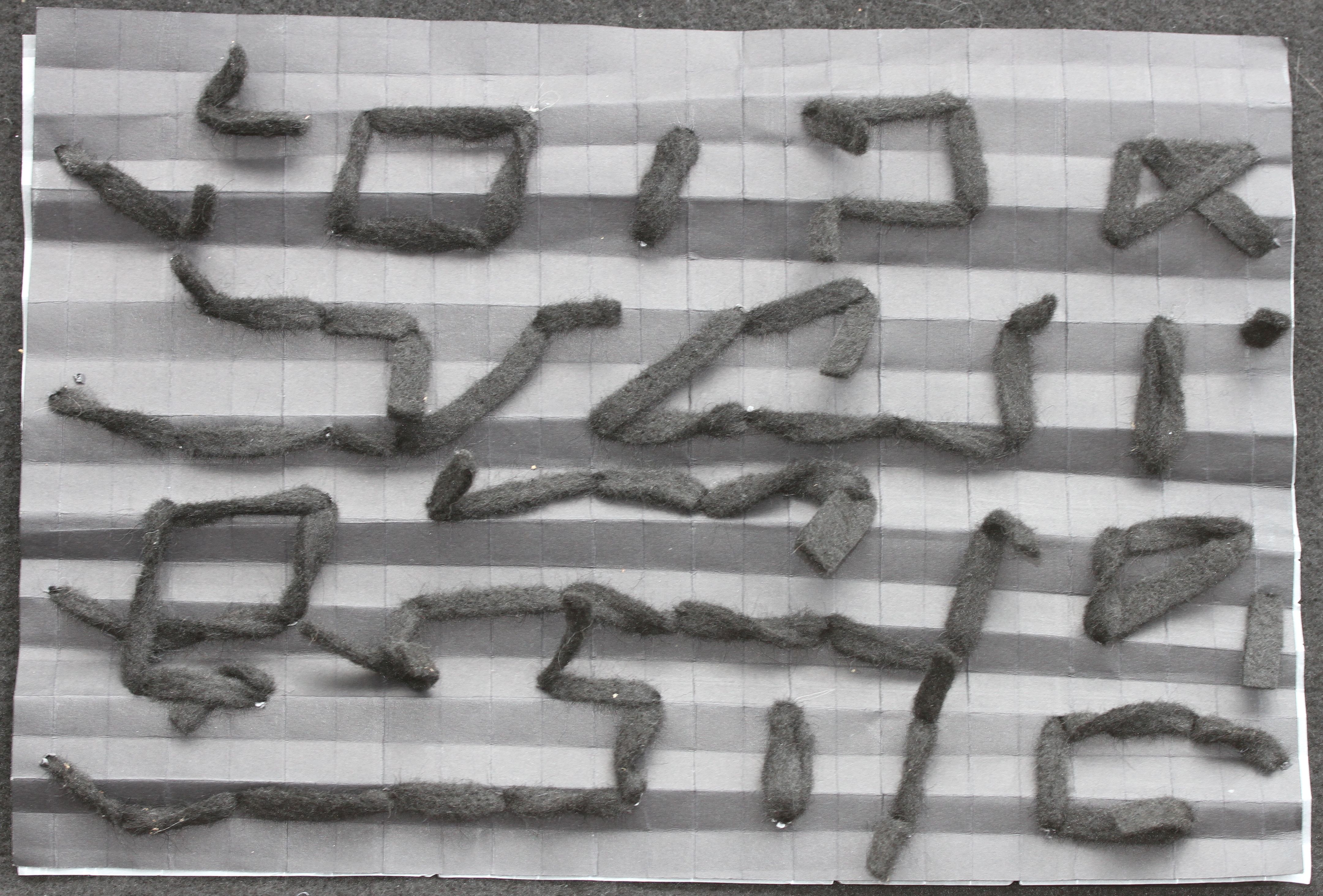
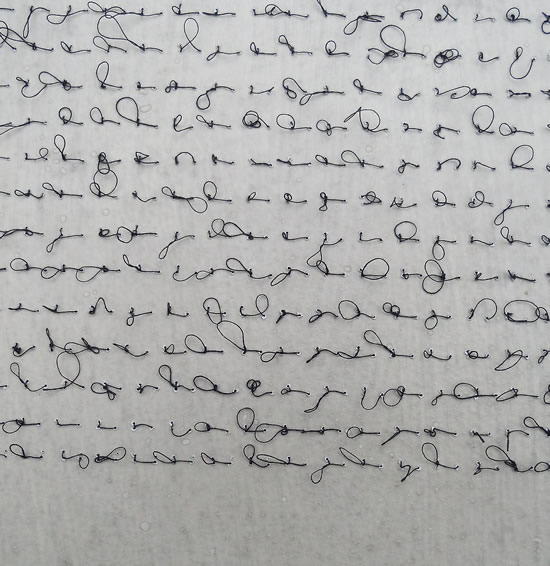
Hillary Ellis, Enigma II,
Sample 2 Lino Lines
Selected drawing:
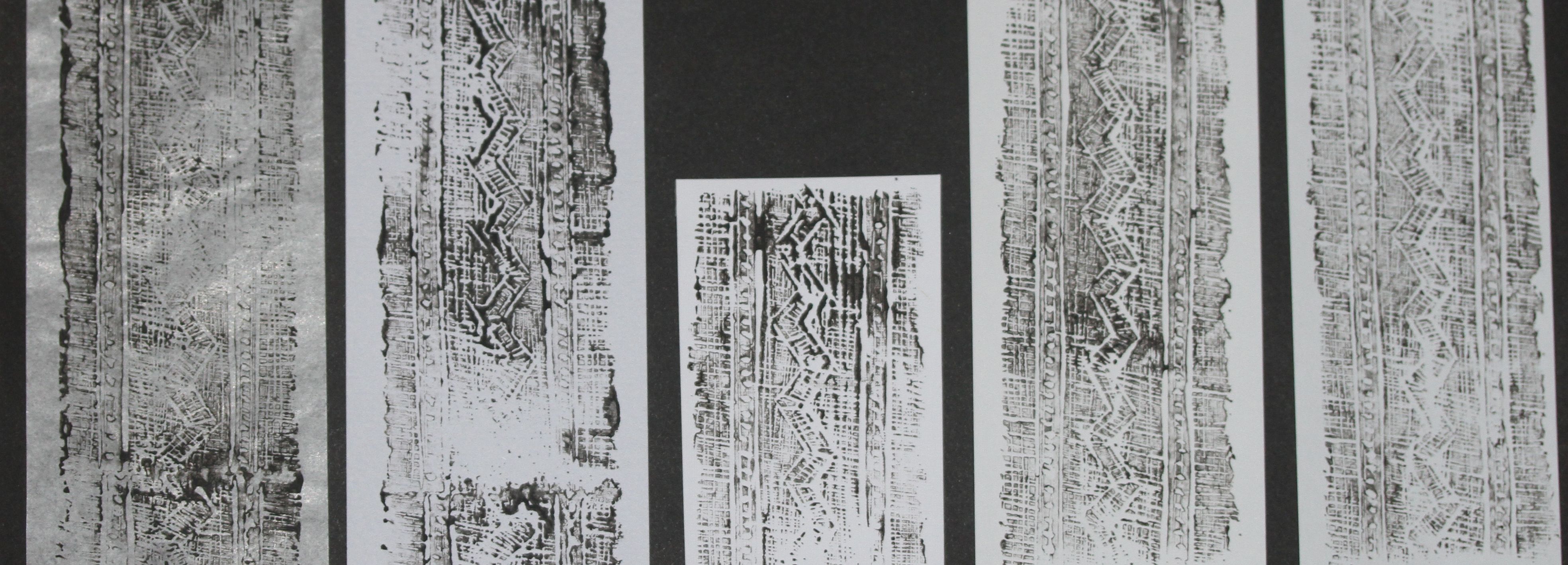
I was bereft of many ideas for the substrate until I reversed my thinking, and started thinking white on black, rather than the more mundane black on white. Then, the ideas flowed.
I discarded the ones I had already used (stitching on card, sanding glossy card) so that I could explore new territory. Two samples were in consideration for the final piece:
|
|
|
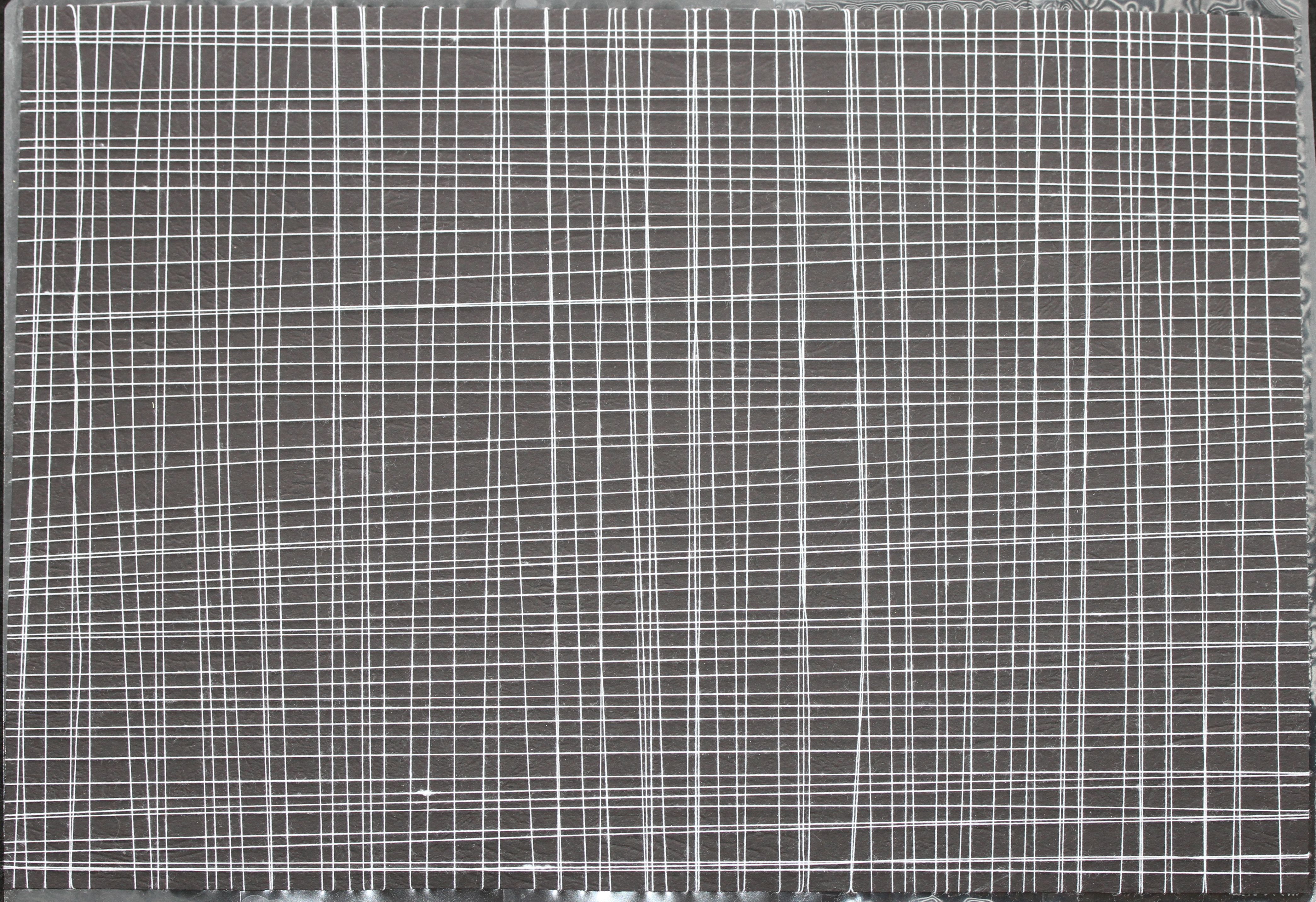
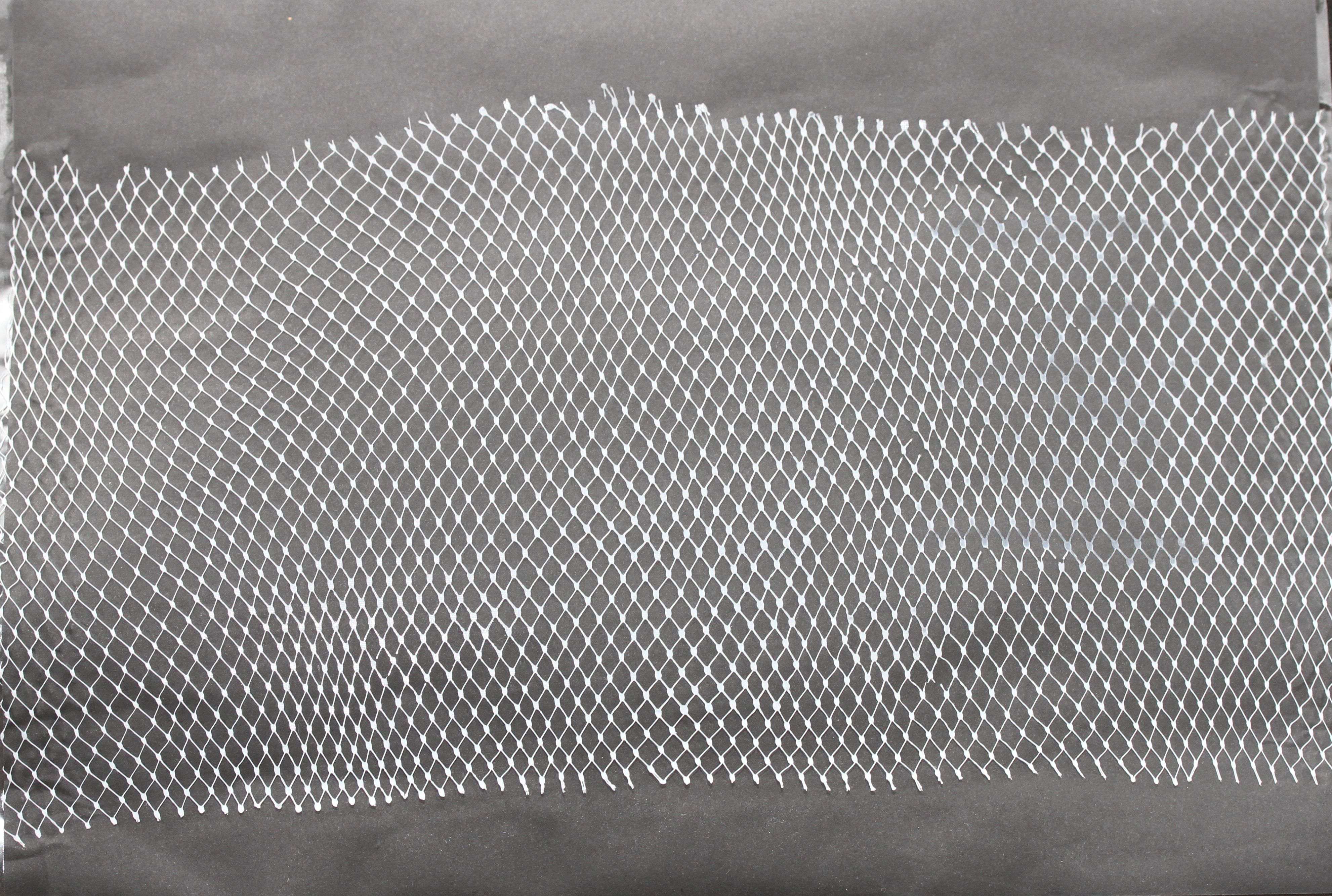
Once created, both pieces were laminated on one side to address the issue of tearing that I encountered during my earlier pieces.
The ‘orange’ bag substrate curled, and was not as evocative of the drawing, so I chose the thread wrapped page.
The white stitching needed to be bold. After auditioning a range of threads, a double DMC #5 perle cotton was chosen for the main lines. Once stitching began, I wasn’t pleased with the level of definitionn, so added couching.
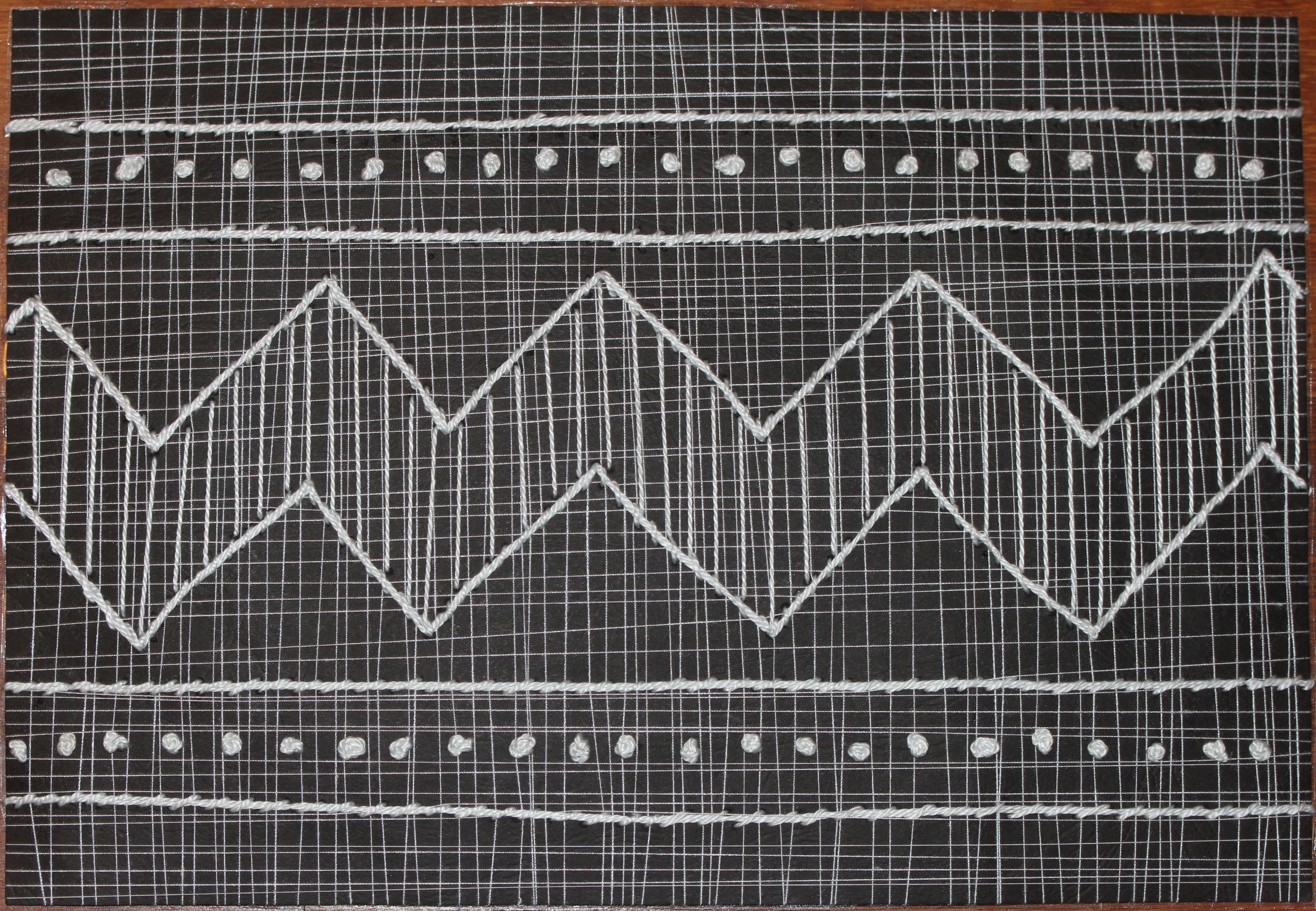
The result flounders, not capturing the quirky lines of the lino print; it seems too ordered, because I have made the lines within the zig-zag parallel.
It is a failure of observation; going ahead without my eye on the original drawing. Drawing with thread is no different than drawing with a pencil. There, I learnt that the eye must spend most its time on the subject; to draw what I see, not what I THINK I see. I feel more in my element with stitch than a pencil, so I neglected this golden rule. A good reminder.
I am, however, pleased with the different levels of shading when looking at the piece from a distance.
References
Ellis, H. (2014) Enigma II, detail,
Viewed: http://www.hilaryellis.co.uk/portfolio1314_image1.html, 5 May 2020
 Kathryn Kerr